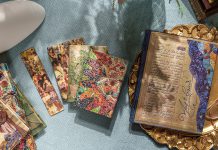

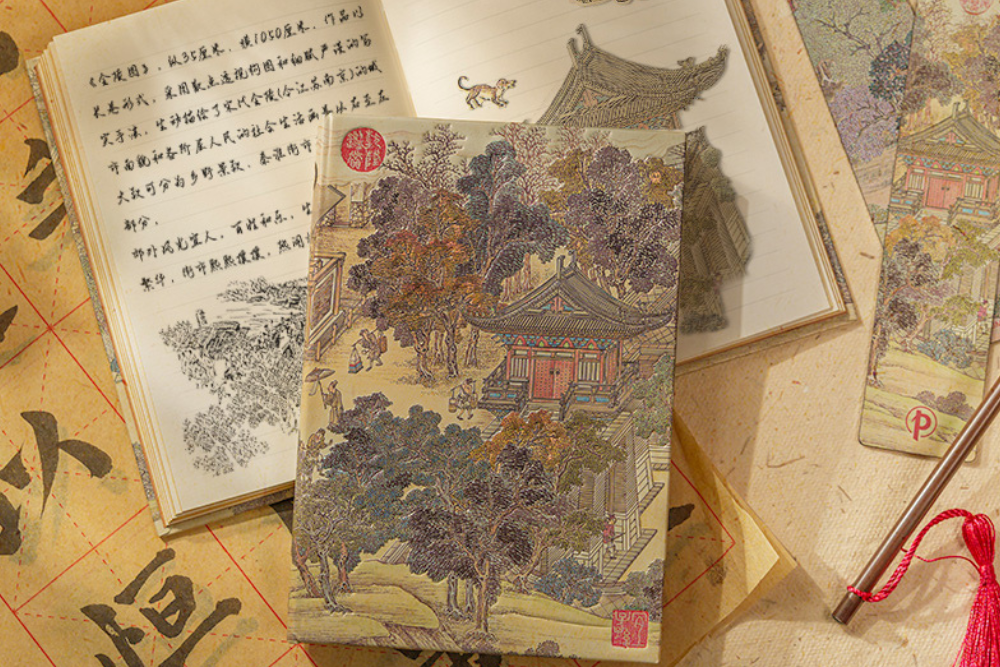
Depicting the cityscape, social life, and customs of Nanjing from over 1,000 years ago in Song dynasty China, our Golden Age of Prosperity design captures the essence of this long scroll. We are delighted to collaborate with the Deji Art Museum to feature this design, described as “an encyclopaedia of Nanjing’s history, cultures, and folk customs,” in our Fall 2025 collection.
Entitled An Era in Jinling, the original scroll was painted in the late 18th or early 19th century by the Qing court artist Feng Ning, inscribed by three Qing emperors – Qianlong, Jiaqing, and Xuantong – and compiled in Collected Treasures of the Stony Moat, an imperial inventory documenting the emperor’s most prized artworks.
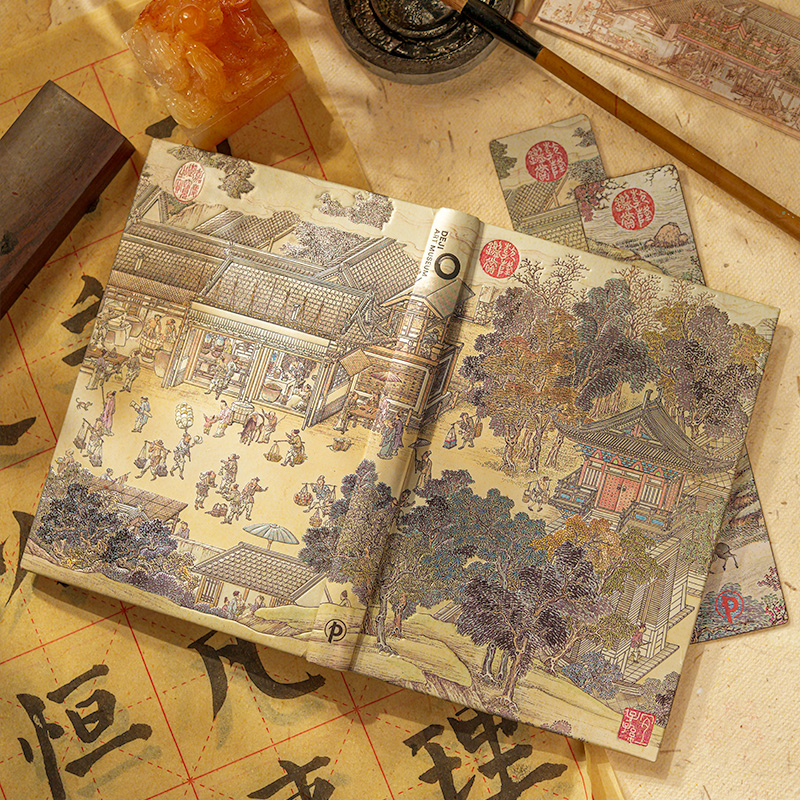
In total, this scroll measuring more than 10 metres features 533 figures, 90 animals, over two dozen carriages, horses, and sedan chairs, and more than 40 shops and vendors. Members of high society, merchants, and peddlers all gather in the heart of the vibrant, bustling city.
When developing the release, our Graphics team was captivated by the opportunity to journey back to 18th-century China. Reproducing the beautiful original artwork, with its length and intricate detail, was both a privilege and a challenge. With so many scenes to choose from, selecting a single snapshot was not easy. However, we feel we got it just right in capturing the essence of the bustling streets of China so long ago.
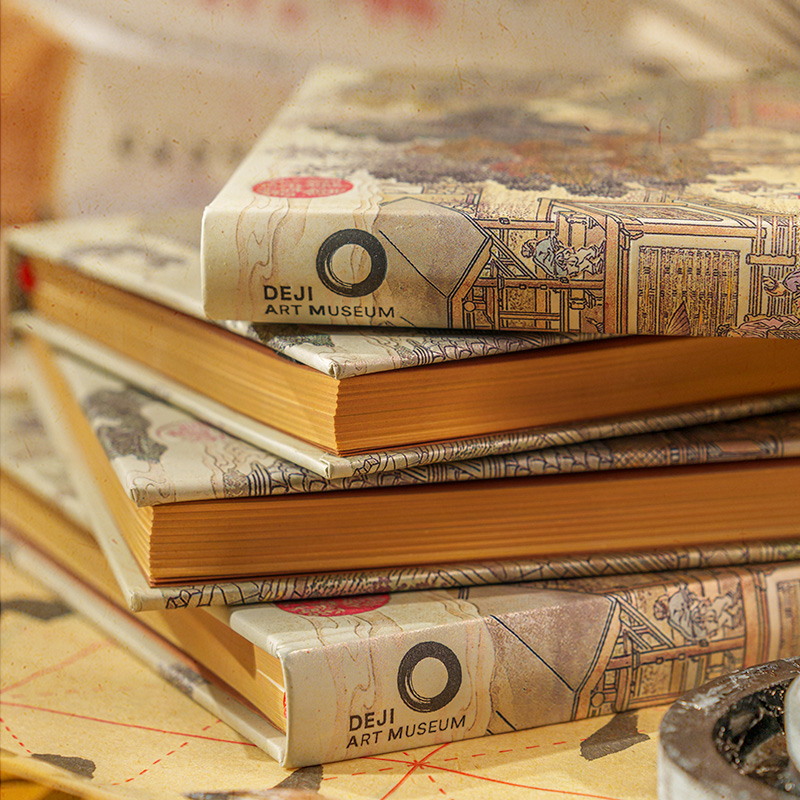
The opportunity to highlight the cultural significance of An Era in Jinling by partnering with the Deji Art Museum has been a new and exciting challenge – one born of our shared appreciation for traditional Chinese culture and anticipation for what could be created together.
We eagerly anticipate the lasting impact of this collaboration, which celebrates and reimagines cultural heritage through design. We hope this Golden Age of Prosperity design is the first of many collaborations with the renowned Deji Art Museum.
Golden Age of Prosperity is available as a hardcover journal, bookmark, canvas bag, and 1000-piece jigsaw puzzle.